Hello everyone, and welcome to today's webinar, "How Resident Acuity Is Reshaping Assisted Living Staffing." I'm McKnight's Senior Living editor Lois Bowers. We've got a great session planned for you today — we'll be discussing the trends reshaping workforce demands and the practical strategies operators are using to build more resilient care teams. You'll leave with insights for supporting caregiver well-being while maintaining high-quality resident outcomes, and more.
We'll get to our discussion in a moment, but first, some announcements. If you're having audio problems with this broadcast, please check the volume control on your device first — that's the most common cause of issues. The sound should be coming from your computer speakers.
We'll have time for questions and answers near the end of today's discussion. If you have questions about the information discussed, feel free to send them directly to us at any time by clicking the Questions and Answers tab on the left.
Today's program is made possible by support from Sage. After this webinar, you can visit sagehealth.com to learn more about the company.
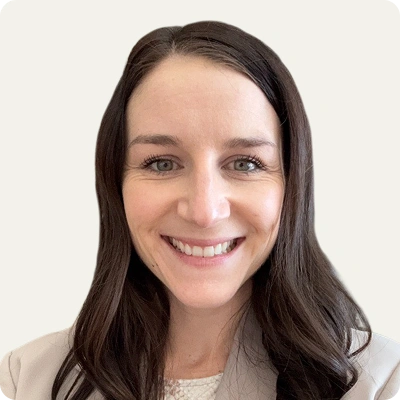
Now it gives me great pleasure to introduce today's panelists. Danae Mierau is the Labor and Staffing Optimization Lead at Sage. Holding a Doctor of Physical Therapy degree, she became a senior living executive and has almost a decade of hands-on leadership experience across rehabilitation, assisted living operations, and software-as-a-service technology serving the senior care industry. As a former executive director of a distressed memory care community, she led the community through a turnaround that saw staff turnover reduced from more than 100% to 42%, eliminated agency reliance, and achieved the highest family satisfaction scores in the community's history. In her current role, she works at the intersection of workforce innovation and senior living operations, helping operators tackle the staffing and retention challenges we'll be discussing today.
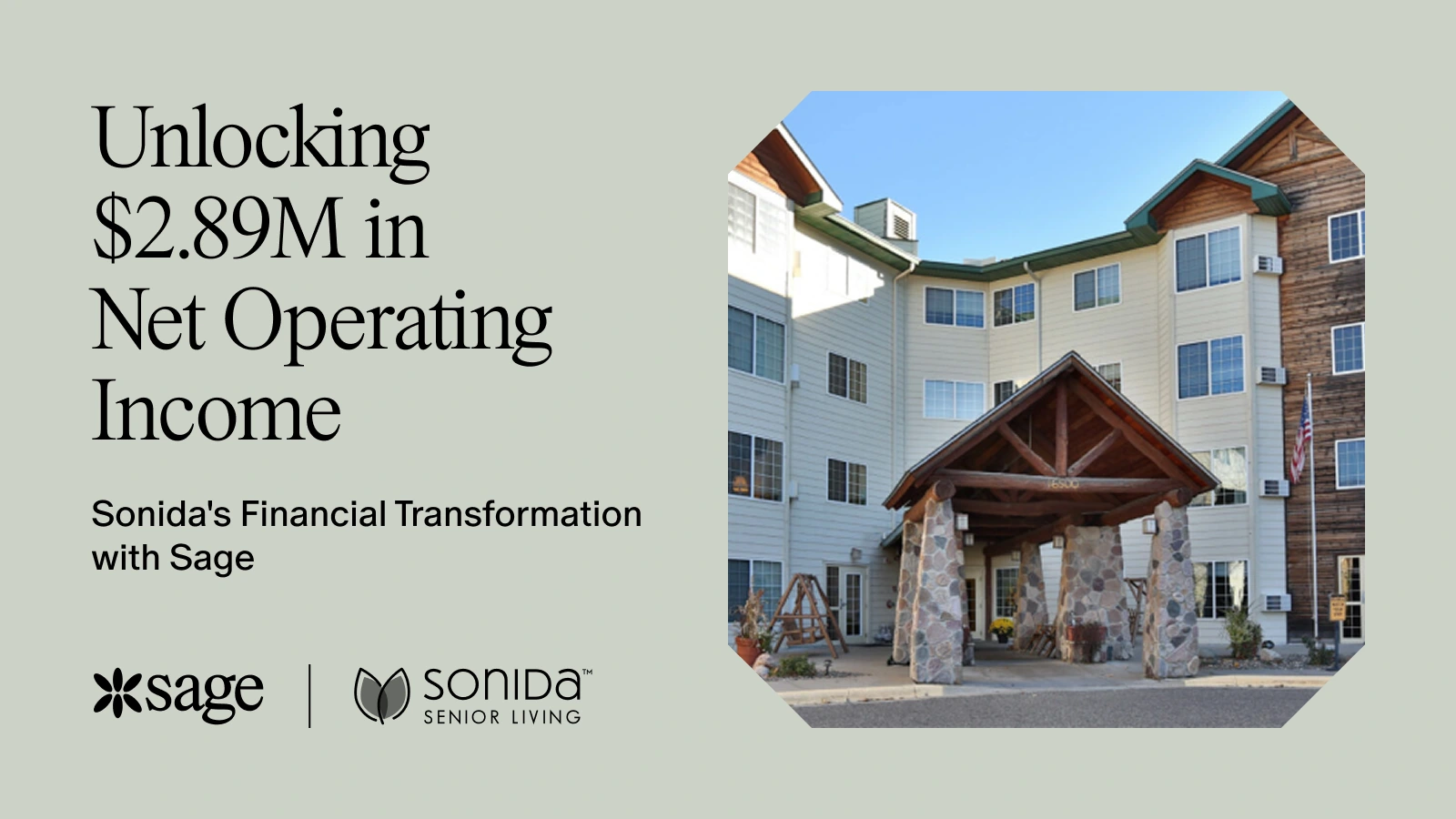
Brandon Ribar is the President and CEO of Sonida Senior Living, where he's also a member of the board of directors. Before becoming CEO in September 2022, he was the company's Chief Operating Officer, where he was instrumental in improving the operating model and navigating the company's response to the COVID-19 pandemic. Brandon brings more than 15 years of experience managing large portfolios and implementing strategic initiatives across healthcare and real estate. Before joining Sonida in 2019, he was Senior Vice President of Operations at Golden Living, overseeing 305 skilled nursing facilities and assisted living communities across 21 states. He also held roles in operational finance and strategy at Golden Living, leading initiatives across skilled nursing, rehabilitation, home health, and hospice businesses.
You'll find our panelist bios in the speaker bio area on the left side of your screen. But we're all very excited about the topics at hand today, so let's move on to our discussion. Welcome, Brandon and Danae.
Thank you. Good to see you.
You too.
The first question I thought I'd start with: when you compare today's assisted living resident to the resident of five years ago, what has changed most dramatically? Brandon, why don't we start with you?
Well, thinking about the amount of time I've spent in the industry over the last, now, 20-plus years — even in the last five years, we're six years removed from the beginning of the COVID pandemic, and think about what that's done and how it's evolved our sector. I'd say it's clear that, on a broad basis, the acuity and needs of residents in assisted living continue to increase.
I think what's really interesting is that, in some cases, the health and wellness of the overall 80-plus population is leading to very healthy residents in their late 80s or early 90s who are moving into communities — whether independent living or assisted living. And what's really interesting is that those individuals, five or ten years ago, may never have accessed senior living. I know we focus so much on the 80-plus population when we talk about assisted living, but we're seeing people — while the acuity may be a touch higher — living longer, and with those wellness profiles, able to move into senior living where they may not have five years ago.
Yeah — and Brandon, you bring up some good points, in that they are moving in maybe a little later, they are accessing assisted living — but we know it's only a matter of time before acuity catches up a little bit. When we think about that acuity, it's really: what does their mobility look like, what does their cognition look like? It's taking those complex care needs one step further. It's not just about the acuity or the complex care needs — it's really about how that translates into the amount and timing of care communities need to provide. And that's really what drives the need for how we staff and how we change, because those traditional staffing models really aren't going to be able to keep up with that rising acuity.
So how has that changed the way operators need to think about staffing?
I think it requires us to be so much more sophisticated and thoughtful around how we design our staffing models, and provide not only the appropriate number of hours to take care of residents, but flexibility in those hours — understanding when residents need certain things during heavier times of care throughout the day, and building in more flexibility around, say, a four-hour shift in the morning or evening when you see upticks in resident requirements.
The most impactful thing on our business is that we now have to invest in things that give us not the anecdotal feedback we got in decades past, but the real-time knowledge of what's happening in our communities. That's a must these days, so you can evolve from a traditional ratio-based staffing model — if that's what you used in the past — to really getting the right individual providing the right type of care on a timely basis, to meet people's needs and also address the unplanned care needs that come up when you're working with residents who have significant acuity.
I think Brandon nailed it — it really comes down to: do your community leadership teams have insight into labor insights? That touches on a lot of what Brandon mentioned — what does care volume look like throughout a 24-hour period? That's different community to community, resident to resident. Also, how are staff performing — where do we need more education, how's first shift performing versus second versus third — and how does that tie back to the community leadership team's ability to manage their labor budget? Because we want to meet resident needs, we want our staff to feel supported, but we also want to do it in a fiscally responsible way, and that's a lot to juggle for community leadership teams.
A lot of times, when communities have access to these proactive labor insights, the bad things stay away — it's not the first time they're seeing something bad happening: their overtime stays at a reasonable level, they're not having to use agency, they're not going way over their labor budget. When we do see those things, we often look back and think, "we kind of knew something was coming" — if they'd just paid attention to those proactive labor insights, they probably could have made a more proactive change.
So what assumptions about staffing no longer hold true?
I think there are so many assumptions. One is that we understand exactly when care levels rise and fall, or what times of day, or the impact the mix of your residents has on the staffing model. We used to rely on global assumptions — often the knowledge of community leadership, or feedback from nursing staff or CNAs. But now, with modern technology, you remove that level of uncertainty. It's no longer an assumption — it's based on the actual, changing underlying need of the resident.
So what does that allow you to do? It allows you to get out ahead of it, versus being reactive. Our hope is that the future of staffing in this business is absolutely that balance — between personal knowledge and behavior, but also the data you can gather to see how trends are evolving, and be predictive and proactive. That's how we'll get better and better, which is a necessity given the changing and heightened expectations our residents have when accessing our services — in addition to the fact that the cost of those services is going to continue to increase, in terms of what we ask from a rent perspective.
Yeah — to sum up what Brandon said, it comes down to visibility, and ensuring we're investing in technology that provides that visibility. What I love about the labor insights and level-of-care insights Sage can provide is that it's very caregiver-driven. We think of who's closest to that resident throughout the day — it's our caregivers. They're noticing these changes. When residents are needing more care, we do need more staffing. And it's that visibility of all that work being done, providing it to the leaders, so they can make more proactive changes.
And the other important thing is it also allows you to highlight success as a leader. Top performers — if you have a commitment to retaining, developing, and highlighting those doing a great job — they welcome the visibility. They've always been working hard, and maybe taking their unfair share of the responsibility.
So there's a bit of apprehension when you first come in, because you're saying "now we're tracking our team members," and they feel like "they're watching every step I'm making." That's really not the intent — the goal is to highlight those doing a great job. The best performers will perform well no matter what technology you put around them, and it allows you to really highlight, pay, compensate, and recognize your best performers. That's what we've seen in the years we've been investing in staffing technology.
Okay, great — let's talk a little more about resident acuity. Brandon, what does increasing resident acuity actually look like operationally inside a community?
I think it increases the amount of training and development, and the importance of how you retain and identify the right team member to match up with resident acuity. For instance, med passes are becoming more onerous because the number of medications residents take has increased substantially — figuring out how to match up that time and resource with the nature of the med passes, and whether you can align them into shorter shifts, four-hour shifts, versus somebody doing a lot for four hours and then not much for another four.
We also look at acuity as: how are residents able to access services outside our four walls? Are we able to get residents out shopping, to dinner, to community events? That's a key indicator of whether acuity is getting tougher — if people are always in their units, unable to access things outside in the market, that means acuity is evolving in a way that needs stronger clinical and ADL assistance and oversight.
We always want to be balanced — it's important people can age in place and that we evolve to their care needs as they move up in levels. But it gets tricky if you're only choosing to bring in residents with really high daily and hourly requirements. So finding a balance is the most important thing from our perspective.
And Danae, what are you seeing across the operators you partner with?
Similar to what Brandon and the team at Sonida are seeing — every resident is a little different than the next. Two residents can be within the same level of care, their care plans can present similarly, but the time spent completing those care plan tasks can be dramatically different, resident to resident. It may take a caregiver three minutes to help one resident to the bathroom, and 27 minutes to help another. So capturing time spent with a resident to meet their needs is vital.
Two: really acknowledging there is planned care and unplanned care. We aim for our care plans to be completely accurate to what a resident needs throughout the day, but the reality is maybe a resident is scheduled to be toileted four times a day, and that's happening — but the resident may also be alerting staff that they need to go three more times. That difference between planned and unplanned care matters.
And third: resident routines really change and shift. A community I recently visited was shocked to see their response time and care volume around 7 a.m. increasing dramatically — driven by three residents whose routines had simply changed. They'd lived at the community a year; staff knew they liked to get up between 9 and 9:30, but they now wanted to get up between 7 and 7:30. It was an easy labor shift — we simply had a caregiver start an hour earlier. Care volume returned to normal, and residents got the care they needed. These operational changes present in a lot of different ways, and it's important we look at them and adjust our labor accordingly.
Let's continue on operational effects — where do operators most commonly underestimate them, in your experience? Danae, let's go back to you.
I think it comes down to gradual increases, similar to the examples I just outlined. Most operators are really good when a resident has a fall or major change in condition — we reassess, we update the care plan. But while that's happening, there are likely six, seven, eight residents showing gradual changes that add up to real time being spent by caregivers.
I also think memory care — that's a passion of mine, I ran a standalone memory care community — that transition is hard for families, and many communities with assisted living have residents likely approaching the need for memory care before that actual change happens. They require more time from assisted living caregivers, redirections take longer, and that impacts labor operationally.
And the last thing we want is to ignore the warning signs and see overtime and agency usage become the first sign of a labor problem — because a lot of times, there were warning signs prior.
And Brandon, how about you?
As far as the most commonly underestimated operational effects, I think Danae touched on speed to adjustment — the business is more dynamic than it was five, ten, fifteen years ago. Things are occurring on a real-time, day-to-day basis, and you want to react quickly and get into more of a predictive, proactive model.
The other piece that gets really interesting is that, especially with a community that has multiple product types — a mixture of independent living, assisted living, and memory care — and you couple that with price points between those continuing to widen, you could be looking at a $2,000, $4,000, $6,000 impact around changes in a resident's needs.
I think operators tend to get behind the curve, not necessarily adjusting to residents moving, or getting the right environment for somebody ready to shift from independent living to assisted, or all the way to memory care. So operators need to keep getting the right information from their leadership and systems, to inform families when those trends are occurring — because it might be a very material financial impact to somebody. As operators, we've always been a bit hesitant — more conservative, thinking "they'll be fine another month," or "that person doesn't quite need that yet," because we know the family and maybe they can't afford it, or it's too big a jump. So we need more, and stronger, information to make those real-time decisions. We're still not totally there yet, but better than we've ever been.
One thing I'd add, Brandon — if you have the data to show "this is what we're providing for your mom and dad," it's not "here's what we're going to provide," it's "we're already providing this." It's really powerful to bring to those conversations, and makes a not-so-fun conversation a little easier for our wellness directors and executive directors.
Yeah — senior living has always struggled with family members being super concerned about what happens inside the four walls. There's this traditional concern around the "black box" — not knowing what's happening, not knowing how well a loved one is being cared for, so needing a camera in the room, or daily updates. Understanding that the consumer's perspective probably isn't going to evolve away from that, we have to be out in front, giving them good information — because this is going to be a challenging stage of life, with great things and challenging things happening. But the more we meet customers' expectations ahead of time with the right information, the better the reputation, the more positive the interactions. That's been a big focus for us, and other strong operators.
You both touched on changing labor needs with changing resident care needs — many operators believe they might have to choose between labor costs and resident care. Is that really the tradeoff? Brandon, what do you think?
I don't think it is. There's always opportunity to invest in our strongest caregivers, recognize them, and that ultimately helps control your costs and overall hours. If you staff traditionally — turnover as just a fact of life, replacing that person with the next, needing "x" hours or "x" people per resident — you're not going to control your labor costs, you'll be at the whim of the market.
But if you identify, invest in, and develop your strongest caregivers, team members, and service providers, your resident care actually gets better while you manage labor costs. Do I think there's a correlation there? I don't — you can continue improving resident care and managing labor costs.
The last thing I'd say: differentiation will continue based on price points and rent. If I'm charging $15,000 a month in rent, the amount of care hours and labor might be different than if somebody's paying $6,000 a month. So there will be some correlation between overall hours and what someone's paying.
I'd love to answer with a "no" as well, but I don't want to undermine the difficulty of this challenge for community leadership teams. It's easy to say "you don't have to pick between the two," but resident needs can change in the blink of an eye — staffing and labor management change every 4, 6, 8, 12 hours at shift change, and retention efforts need to happen every day.
Organizations achieving the strongest outcomes aren't necessarily spending more — it's taking that full community effort: really invest in your teams, track resident needs and care, and train community leaders on the tools they have, to make the best decisions — balancing caregiver satisfaction, resident care, and the NOI of the community.
I'd add to that, Danae — this is also where how you market your business, how you perform on the sales/resident-acquisition side, is hugely influential. If you've got 10 to 15 move-ins a month, and those move-ins have the same or higher acuity as existing residents, you're by definition putting more pressure, more hours, more requirements on your team, and need to invest in additional care staff. Keeping that balance — people without as much immediate care need, alongside those evolving in their care model — is super important.
Good points. So your two organizations, Sonida and Sage, came together to tackle labor optimization — what were the primary goals of that partnership? Brandon, we could start with you.
I'd say, from our perspective, it's delivering on what I've spoken about — achieving greater visibility and better analytics, and a better platform to recognize great performers and understand resident needs and acuity. Those are the two variables that are more influential than anything in this world: recognizing people doing a great job, and Sage has allowed us to evaluate and understand team-member performance and how it's impacted by resident care needs. And it's allowed us to have visibility into resident needs that we can share with their loved ones. When we set out, those were the things we felt were absolute requirements of any system we'd invest in — could it check those boxes?
Communication is so important, as you mentioned — that's never going to change. Danae, how about you — what were the primary goals from Sage's standpoint?
I think aligning with Sonida on the problem we're trying to solve together as partners — how do we acknowledge our top performers, how do we help community leadership teams manage their labor budget better in order to meet resident needs. What that comes down to is taking a very complex, ever-changing problem — clinical labor management — and making a process that can feel chaotic at the community level data-driven. Really working with community leadership teams to transform how they approach and execute their staffing models.
How we've done that alongside Sonida is dedicating someone completely to clinical labor management through an embedded model. I've had the pleasure of spending a lot of time with Sonida communities over the last several months, bridging the gap between the tools they have access to. Brandon hasn't mentioned it yet, but I'm sure it's coming — Sonida built an amazing tool, SPIN (Sonida's Performance Insight Navigator), that helps guide communities to make great decisions throughout the day, marrying that with the labor and care insights within the Sage platform to make data-driven decisions in real time — so you're always staying ahead of it.
When I work with these communities, I approach them as an educator — I'm going to teach you how to use the tools you have. Because a lot of our wellness directors went to nursing school — they didn't go to business school — and now they're expected to not only provide great care, but make sure retention and turnover are strong, and manage a labor budget. That is very challenging.
Two: it's being an advocate for them. To Brandon's point — when you have a month with 10 or 15 move-ins, and you're also seeing level-of-care changes and those recommendations showing up in Sage, and communities acting on them, labor is going to have to change. Bringing that to the Sonida leadership team — they've been very open to communities needing more staffing when resident acuity says they need it.
And the last thing I'll say: no one loves labor optimization. As a wellness director or executive director, if you hear "we're going to do labor optimization," you immediately think "you're going to cut my shifts — yes, I know I'm over budget." So we work with them to say: we're not necessarily going to cut hours — yes, in some cases we will — we're going to reallocate the hours you need to care for residents, based on the care volume you see in the Sage dashboard, or within SPIN. Once we empower our teams to make those data-driven decisions, they're more confident in them too.
Data helpful. Yeah.
I'd just say — and this holds true for any technology partner we've selected over the last couple of years — Sage is one of the first, and clearly one we use across almost the entirety of our portfolio. You've got to find partners who will adjust and adapt as technology evolves. We weren't trying to solve for the problem as it was just today — we were investing time and energy with people and a team that had the expertise to adjust as bigger tools, or the impacts of various forms of AI, influence the business, and who are investing in that ahead of us, in partnership. That was a really important part of checking the box — if our SPIN tool, as Danae referenced, and Sonida's Performance Insight Navigator (the very long version we never share with wellness directors, because SPIN is so much nicer and easier) — if you want that tool to keep evolving, you've got to pick the right technology partners to get the information into your systems.
Okay, great. Both of you described the model as data-driven and embedded — could we talk more about the results that have come from that? Brandon?
I think, for us, the results we most care about — how do we measure success? We measure it based on how it's influencing our employee base: are we able to positively impact turnover, because the systems and training we're putting in place, people want to use? It creates more stickiness across our employee base. Our turnover has come down — over the last four years, each year, by nearly 10 percentage points. That's near and dear to our heart.
Resident satisfaction is clearly right up there too — it comes from how family members perceive the care being provided, from reviews about each community. It all flows back to the visibility and knowledge we're able to bring to meeting residents' care needs. If you get the team-member piece right, and the resident and family experience right, everything flows through to the more traditional metrics — labor costs, overtime dollars, hours per resident day. But that's the output at the end. The most important thing for us is: are we impacting staff retention and satisfaction, and residents as well?
And how about you, Danae?
I'd love to spend the next few minutes highlighting results we've driven at three specific communities — they've been a joy to work with.
Community One: when I started working with them, they were exceeding their nursing labor budget by more than 10 hours a day. The wellness director was new to the PRD staffing/budget model, so we started there, educating her through SPIN. One thing remained strong throughout: their care to residents was extremely strong — you could see it, I went on-site at all these communities, their residents looked great, they complimented the community. Their response time was always under five minutes, but they were running over budget. We did a deep dive into reallocating hours based on the care volume we saw within Sage Insight, and redid their staffing model — they were stuck in a fixed 6-to-2, 2-to-10, 10-to-6 model, and we implemented some four-hour and some 12-hour shifts. Throughout, the community maintained strong communication with caregivers about why these changes were being made, and that the data and care they were providing were empowering these decisions. The community's response time remained strong — under five minutes. No caregivers quit. Their turnover actually decreased. And now they're hitting their labor budget — they decreased their labor spend by about $180 per resident per month, while maximizing clinical care.
The second community was on the opposite end — staffing under budget. But about a month before I went on-site, caregivers on first shift started expressing concern they were having a hard time keeping up with resident care needs, specifically at 7 a.m., 10 a.m., and 12 p.m. — feeling strapped for time. The data supported it: over the prior 20 to 30 days, with those gradual resident changes, care volume and alert volume had increased, and caregivers weren't getting to residents as quickly as they traditionally had. It was awesome to see — caregivers brought this problem to us, and the data supported it. We implemented schedule changes: added a caregiver 6 a.m. to 12 p.m., cut hours 8 p.m. to midnight where volume had declined, and added a full caregiver overnight in memory care given a recent census increase there. Best part: we did this within their labor budget, and their response time decreased from eight minutes to four minutes.
Community Three: exceeding budget by about 7 to 9 hours a day. Their schedule aligned with their budget, but what was actually worked was different — that was the gap to close. It was shift transitions: caregivers and nurses giving report. That's a wellness director's dream, when staff actually do a thorough report at shift change, so we didn't want to discourage that — but we had an honest conversation: we'd schedule an extra 30 minutes at the end of shift, but it couldn't exceed that. 80% of staff at this community were staying 45 minutes to an hour after their scheduled shift, creating the budget gap. We rebalanced, educated staff, cut a few hours where second-shift volume had declined, and this community is now functioning fully within budget — they decreased their labor cost by about $95 per resident per month.
So all this to say: it is possible to use these labor insights to make impactful changes — not only financially, but to meet resident and caregiver needs.
Those are some great examples — thanks for sharing those. Now we'll give Danae a little break. Brandon, changing gears: given everything we've discussed, how is Sonida preparing for the future?
We've learned so much in the last couple of years — everybody in this world is thinking about how they grow and expand. We've more than doubled the company in size, and our investments have let us successfully integrate new communities based on what we've learned from our existing portfolio, and what we need to act on immediately based on the characteristics of new communities coming on board.
How we think about the future is: what's the right model that produces the outcomes that make a Sonida community what it is, and what we're proud of? Whether independent living standalone, or a combination of assisted living and memory care, we feel confident in the knowledge we've gained about how communities can run well. It's the only way you can scale — if you have good, solid information about what's happening inside a community, especially one you've never run before. As anyone who's done acquisitions knows, your assumptions are always wrong, and you figure things out quickly, one way or another.
We've thought a lot about what we've learned about our business model over the last three to four years, and what that means for how we grow. There's always work to do in the existing platform, but plenty of growth opportunity ahead. And my experience tells me that unless you're ready to invest, as an operator, real time and resources — people dedicated almost their entire day to these efforts — it's tough to move the needle quickly. Where we've chosen to invest, with partners like Sage and within our own business, in people focused on training, developing, and identifying outliers — the payback is evident. Just investing in technology and telling regional operators or EDs "go use it, it'll be impactful" isn't enough on its own — the good ones will do a great job, and those who don't use the tools well will see zero impact. Being intentional about how we invest in these systems is something Sonida has really focused on.
Congratulations on the growth, by the way. Danae, what have we got?
A lot of fun. Team members are still picking up my phone calls, for now.
That's good — that's important. So Danae, what separates organizations making progress toward goals like Sonida's?
I'll keep this brief. Building on what Brandon said — investing in leaders, and especially our wellness directors. Sonida does a strong job investing in those directors, empowering them to treat labor management as part of delivering great care — putting on that "nurse hat," which is what they were trained to do. We have a responsibility to that role, and the countless things they juggle daily, to invest in how they use technology and tools to make workflows easier.
More broadly: empowering community leaders with real-time data. We can't expect quick, data-driven decisions if leaders don't have the tools or data at their fingertips. It's not about more data — it's about giving them data they can actually act on, that's insightful for running their community. That's where we've seen organizations separate themselves and perform stronger.
Everyone knows turnover is expensive — what costs do operators often underestimate? Danae?
If I asked the audience what turnover of one frontline caregiver costs, we'd get 300 different answers. It's expensive, and hard to put an exact number on.
Operationally, it shows up as continuity of care. When one person quits, it throws off team morale and how coworkers work together, since they know a particular caregiver traditionally handles a resident well. It interrupts workflow for frontline staff and leadership alike — leadership only has so much bandwidth. A lot of this shows up operationally before it shows up financially, which makes it hard to put an exact dollar figure on it.
I'll play skeptic for a moment — training and development hours, and leadership time to recruit and replace someone, are real, but don't always show up immediately in the P&L. What does show up: did you have to hire someone at 10% above your previous strong employee because it's a tight, inflationary labor market? That's real, recurring dollars.
On revenue — what do residents and families base their decisions on? Reviews, reputation, the team, the caregiver profile: did the same caregiver show up consistently over six months, or were there eight different versions of them? That directly drives reputation, volume, and occupancy.
And the last piece: when you ask for meaningful rent increases, if you haven't provided staffing consistency, it's much harder for people to feel they're getting the value they're paying for. If they see the same team member and build relationships, asking for a rate increase — even a larger one than they expected — is far easier if they have confidence in your team. So: direct wage replacement, reputation that drives volume, and the ability to pass through a rate increase people will work with you on — those are the three direct relationships between turnover and business performance.
Okay — Brandon, what other things have made a big difference at Sonida?
Oh — people, people, people. I think the future of this business is continuing to evolve and get the right information to our executive directors, wellness directors, and leadership running the buildings — they're the most important people in this company — and to our caregivers, who matter so much to who we are. But I don't want any of them to be really good analysts. I want the information from our systems to guide them toward the things they can do to deliver the best outcomes for residents and team members. So the future is about expanding into thoughtful places, buying the right communities, and engaging and developing teams to run them well. That's the beauty of this business — get those things right, and you'll be successful.
I wondered if you could both talk more about the connection between staffing and retention. Brandon?
People like working with people they enjoy working with, who work as hard as they do, and who recognize the work they're doing. It's hard to convince someone they're valued if they're doing 80% of the work and their shift partner is doing 20%. People want to be rewarded and recognized for what they put in — that's human nature. And a great person doesn't want to be surrounded by people who aren't as committed, or who aren't doing things the right way. It's a big piece of how we think about retention and staffing.
And Danae?
Staffing and retention have a strong connection. I really want to highlight our caregivers — when we give them the tools to manage their day and complete their workflows, and go one step beyond that: it's the care and work they're completing. Yes, they're documenting it, and we're capturing that through their workflows, but it gives caregivers the opportunity to be seen, heard, and part of operational decisions at the community level — and then rewarded for it, as Brandon said. I'd rather give a top performer a 10% increase than rehire someone who's a gamble and hasn't proven themselves. The more we pour into our staff and make them part of the solution — the hard solution of labor management — the better off we'll be on retention.
Looking ahead, what should operators begin doing today to prepare for the next five years? Brandon?
Spend real time on how your building is viewed by someone looking for services in your market. Demographic trends mean more eyes will be on what we do, and people don't have patience to dig in deeply — they're in a challenging stage of life with their loved ones. Everyone on this webinar has had conversations with a friend or colleague about senior living and aging. The more operators ensure the great work their teams are doing is reflected in how the community is perceived in the market, the better set up they'll be.
We're big believers in paying individuals at or near the top of the market — we call it "investing in our best," and we'll keep spending time on that. We're fortunate we invested in these systems and partnerships three or four years ago, so now we're working to get the most out of them, including our SPIN tool. But if operators haven't taken the plunge on getting good insight into what's happening in their four walls, that's something to think about today.
And Danae — any advice for the next five years?
I'll keep this brief: really understand and measure resident acuity continuously, not just at a three-, six-, or nine-month reassessment. And, building on Brandon's point, really partner with teams and give them visibility. It's not about more data — it's about what will actually drive them to operate differently tomorrow than today. These folks are busy — it has to be quick and clear: "I know what to prioritize today," so they can act on it.
Okay, one more rapid-fire question: what's the main takeaway message for those watching? Brandon, let's start with you.
The main takeaway is that you need to identify the right systems to put really special people in positions to provide great care. If you want to scale your business, you have to invest in the things that attract and retain talent to run great buildings. Today, more than ever, we have access to information that helps families believe in the product, helps residents get the right care at the right time, and lets you reward and incentivize the people providing day-to-day activities of daily living. You get a chance today to build a really special mousetrap, and make it easier to recruit and retain great leaders in every building. That marriage between technology and people has never been easier — and we're huge advocates of it.
And Danae?
Building on what Brandon said — really invest in systems that give a holistic view of a community. It's easy to look at labor, clinical care, or caregiver performance in isolation, but a system that really marries that information — because it's all interconnected — is what results in the best community operations.
Thank you. Let's take one or two audience questions. First: how is behavioral or mental health acuity being considered when managing staffing models?
Go ahead — you're the clinician here, I'm just the guy in the jacket.
It's definitely something we need to consider — residents are coming to us with more complex needs, and sometimes a resident with cognitive impairment is expressing behaviors as a way to communicate. Capturing how long redirection takes, or how long a "simple" task like getting someone to breakfast takes when there are mental-health considerations, matters. Documenting that time, and adding observations and notes at the point of service, helps the next caregiver take better care of that resident — and lets us pull that data to understand when we need to adjust care and staffing levels.
It comes down to getting the right clinical interventions in place quickly, and understanding the overall environment in your community — the right balance of personality types and needs, and staying aware of when that shifts, so you can make the right changes.
Lois Bowers 59:48
Thank you both for that. That's all the time we have for audience questions today — if we didn't get to your question, someone will follow up with you afterward.
I'd like to thank our panelists for taking time out of their busy schedules to share their insights: Danae Mierau, Labor and Staffing Optimization Lead at Sage, and Brandon Ribar, President, CEO, and board member of Sonida Senior Living. Thank you both. And thanks to Sage for sponsoring this webinar — visit sagehealth.com to learn more.
This webinar will be available to watch again shortly at mcknightsseniorliving.com/071426webinar — feel free to share it with colleagues who'd be interested.
Once again, this is Lois Bowers, editor of McKnight's Senior Living. Thank you all for being here.