AI is quickly becoming one of the biggest conversations in senior care technology.
Every week, operators are introduced to new platforms promising predictive insights, operational efficiency, documentation automation, workforce optimization, and better resident outcomes. On paper, it sounds transformative.
But as excitement around AI accelerates, so do the risks of adopting solutions that were never truly designed for the realities of senior care. Or worse ... are putting the safety and security of your residents in jeopardy.
Unlike many other industries, senior living and post-acute care environments involve vulnerable populations, high-acuity residents, overextended caregivers, complex workflows, and increasing regulatory scrutiny. Technology decisions don’t just affect productivity. They affect safety, dignity, trust, and quality of care.
That’s why evaluating AI vendors requires more than a polished demo or a compelling sales pitch.
At Sage, we believe operators should approach AI with both optimism and rigor. The right tools can absolutely help organizations improve care delivery, strengthen operational visibility, reduce staff burden, and support better decision-making. But responsible adoption starts with asking the right questions.
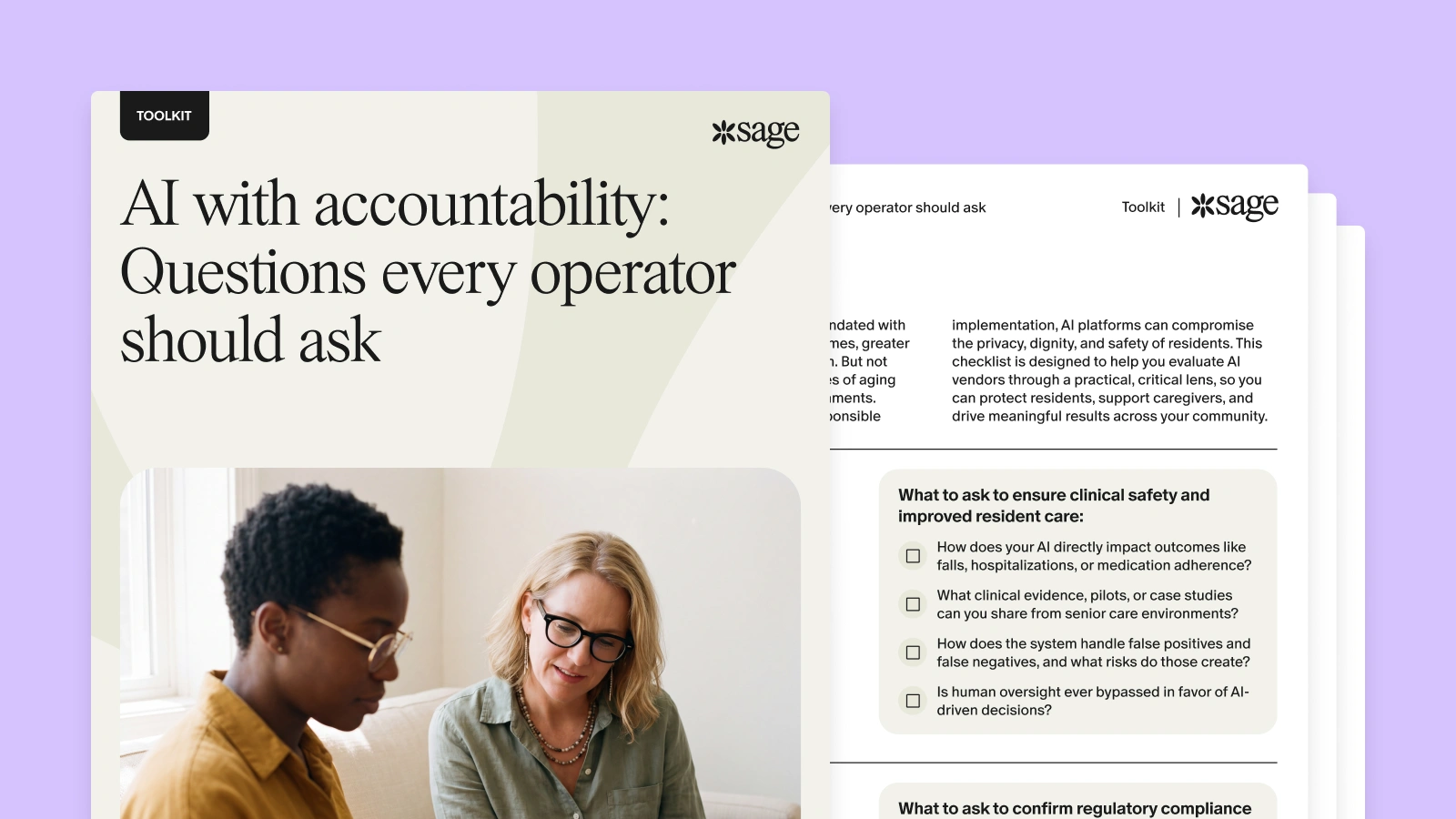
To help communities navigate this rapidly evolving landscape, we created a practical resource: “AI in Senior Care: What to Look Out for When Evaluating Vendors.”
This toolkit is designed to help operators cut through the noise and evaluate AI platforms through a critical, operational lens. Rather than focusing on buzzwords or abstract promises, it centers on the issues that matter most in real-world care environments, including:
- Clinical safety and resident outcomes
- HIPAA compliance and liability considerations
- Data privacy and governance
- Workflow integration and operational fit
- Frontline staff adoption and usability
- Transparency and explainability
- Long-term ROI and vendor partnership quality
The checklist also includes practical questions operators can ask vendors during evaluations, procurement discussions, and pilot programs.
For example:
- How does the AI handle false positives and false negatives?
- Is human oversight ever bypassed?
- What happens if the system goes offline?
- Can resident data be excluded from AI model training?
- How intuitive is the platform for non-technical caregivers?
- What measurable operational outcomes have been demonstrated in senior care settings?
These questions matter because successful AI adoption isn’t just about adding more technology into a community. It’s also about ensuring the technology actually strengthens care delivery without creating new operational or clinical risks.
The future of AI in senior care is promising. But responsible implementation will separate meaningful solutions from short-term hype.
👉 Download the full toolkit here
.jpg)