Holiday Blues: The Unseen Side of the Holidays for Residents in Senior Living

The end-of-year holiday season is a joyful stretch for many, but for many older adults—especially those living in senior communities—it can trigger something very different. Rates of loneliness, depression, and social withdrawal tend to increase this time of year, amplifying emotional vulnerability, sleep disruption, and overall wellbeing.
Research from MedicareFAQ (2024) shows that approximately 57% of seniors report feeling lonely, with 44% experiencing heightened loneliness specifically during the holidays. For residents in senior living communities, about 43% of adults over 60 regularly experience loneliness, which becomes particularly profound during the holidays.
Communities invest a great deal of effort into creating meaningful engagement: holiday programs, intergenerational visits, activity schedules, themed events. Despite organizations' best efforts during this vulnerable period, the challenge is compounded by a harsh operational reality: the holiday season is also a period when staffing gaps are the most acute. Staffing shortages peak between mid-December and mid-January, when 63% of assisted living facilities report moderate to high staffing shortages, and 39% of nursing homes report a lack of nurses and aides. Fewer team members, higher emotional needs, and less time to notice subtle changes in residents’ behavior means early warning signs are often missed.
When care teams are stretched thin, the impact cascades through every aspect of resident wellbeing. Caregivers racing from room to room have less time for the personal interactions that are essential for emotional health. The 15-minute conversation over morning coffee, the gentle inquiry about how someone is really feeling, the observation that a resident who usually joins activities has been staying in their room—these critical touchpoints often fall through the cracks when staffing is inadequate.
Early Signs
These missed moments make it harder to see when someone is struggling. Emotional decline rarely announces itself loudly. More often, it shows up as:
- spending more time alone in their room
- withdrawing from group settings
- changes in movement or daily routines
- changes in sleep or restlessness
- skipping meals or activities
- more frequent requests for reassurance or help
- self-care neglect
- physical complaints such as unexplained aches and pains, fatigue, gastrointestinal issues.
What Operators and Clinicians Can Actually Do About Holiday Blues
Spotting emotional decline is only half the work. What matters most is what we do next — especially when staffing is tight and time is limited. When we catch these patterns early, we can help early. Here are practical, evidence-aligned strategies that teams can use without adding unrealistic burden.
For Operators & Executive Directors
1. Leverage technology to identify subtle changes in condition
With staffing stretched thin, real-time insight becomes a critical support for care teams. Instead of relying on already overextended caregivers to spot early warning signs, technology and analytics available through the Sage Care Platform can highlight at-risk residents and surface the subtle shifts that often precede emotional decline.
2. Strengthen visibility through quick team huddles
Use morning or shift-change huddles to share concerns, flag residents who seem quieter, more withdrawn, or more confused than usual, and coordinate attention where it’s needed most.
3. Leverage families as partners
Encourage families to schedule brief calls, send voice notes, or share photos. For residents who struggle with communication or memory, these small touches carry weight.
4. Recognize the reality of staffing challenges and the people doing the work
The holiday season is hard on teams. Acknowledging that openly builds trust. Even a simple, “I know this is a tough stretch, and I appreciate how hard you're working,” goes further than most leaders realize. Call out small wins in huddles. Thank a caregiver who noticed a resident withdrawing. When caregivers feel seen and supported, they’re more present, more attuned, and better able to show up for residents who need them most.
5. Protect team capacity
Caregivers can’t pour from an empty cup. Supporting them is a direct strategy to support residents. Look for small ways to reduce friction:
- shift non-essential admin work
- ask non-clinical team members to help with engagement
- redistribute tasks during peak hours
For Clinical leaders and Care Teams
1. Educate caregivers on what to look for.
A quick refresher in huddles helps everyone stay aligned on early signs of emotional decline.
2. Call out changes early.
If someone seems quieter, more withdrawn, or “not themselves,” say it in huddles or to the lead nurse. Early awareness drives early action.
3. Prioritize the residents whose patterns have shifted
Once a resident is flagged — either by a team member or through insights surfaced by Sage — make them a focus area for the shift. Plan touchpoints intentionally, adjust the flow of the day so the team’s limited time goes toward the residents who need more support right now.
4. Build micro-touchpoint routines into daily workflow.
Encourage team members to turn existing interactions into brief, meaningful moments of connection with residents. It’s not more tasks — it’s a shift in intention.
For Activities & Engagement Teams
1. Lead with personalization, not programming density
One meaningful interaction beats three large events. Focus on small-group or one-on-one engagements for residents who consistently sit out. Reminiscence-based activities—sharing traditions, talking about holidays from earlier decades, or recalling moments from when they were raising families—can be especially grounding and emotionally supportive this time of year.
2. Offer roles, not just activities
Residents often reconnect when they feel useful — setting tables, greeting others at events, folding napkins, choosing seasonal music. Even small responsibilities create a sense of purpose and belonging, helping residents feel like contributors rather than bystanders.
We can put the right structures in place, build stronger routines, and guide teams toward earlier action — but at the heart of all this work is something simple: showing up for people when it counts. Some of these moments may feel small, but to someone who is quietly struggling, they are lifelines.
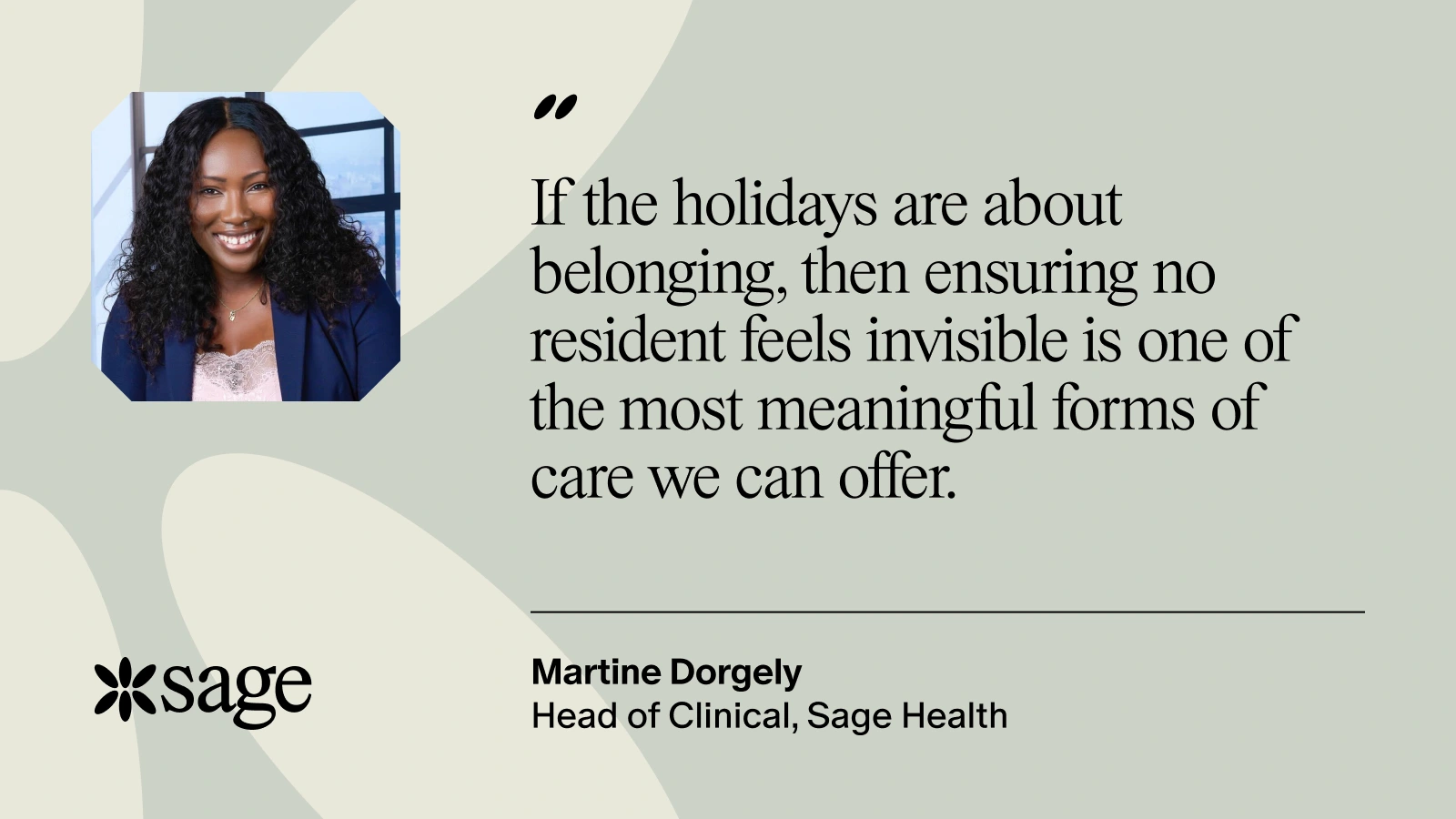
If the holidays are about belonging, then ensuring no resident feels invisible is one of the most meaningful forms of care we can offer — and it starts by giving caregivers the awareness, tools, support, and space to show up in ways that genuinely matter.
No one gets through the season alone: not the residents, not the caregivers, not the families. It’s a shared effort to make sure every person feels seen.
.jpg)