How Senior Living Leaders Can Reduce Caregiver Burnout During the Holiday Season

The holiday season is one of the most meaningful—but most demanding—times of the year for senior living communities.
Residents continue to need consistent, attentive care, even as caregivers are managing their own holiday stress. For leaders, this is a critical moment for you to reduce caregiver burnout and strengthen senior living team member support across the entire community.
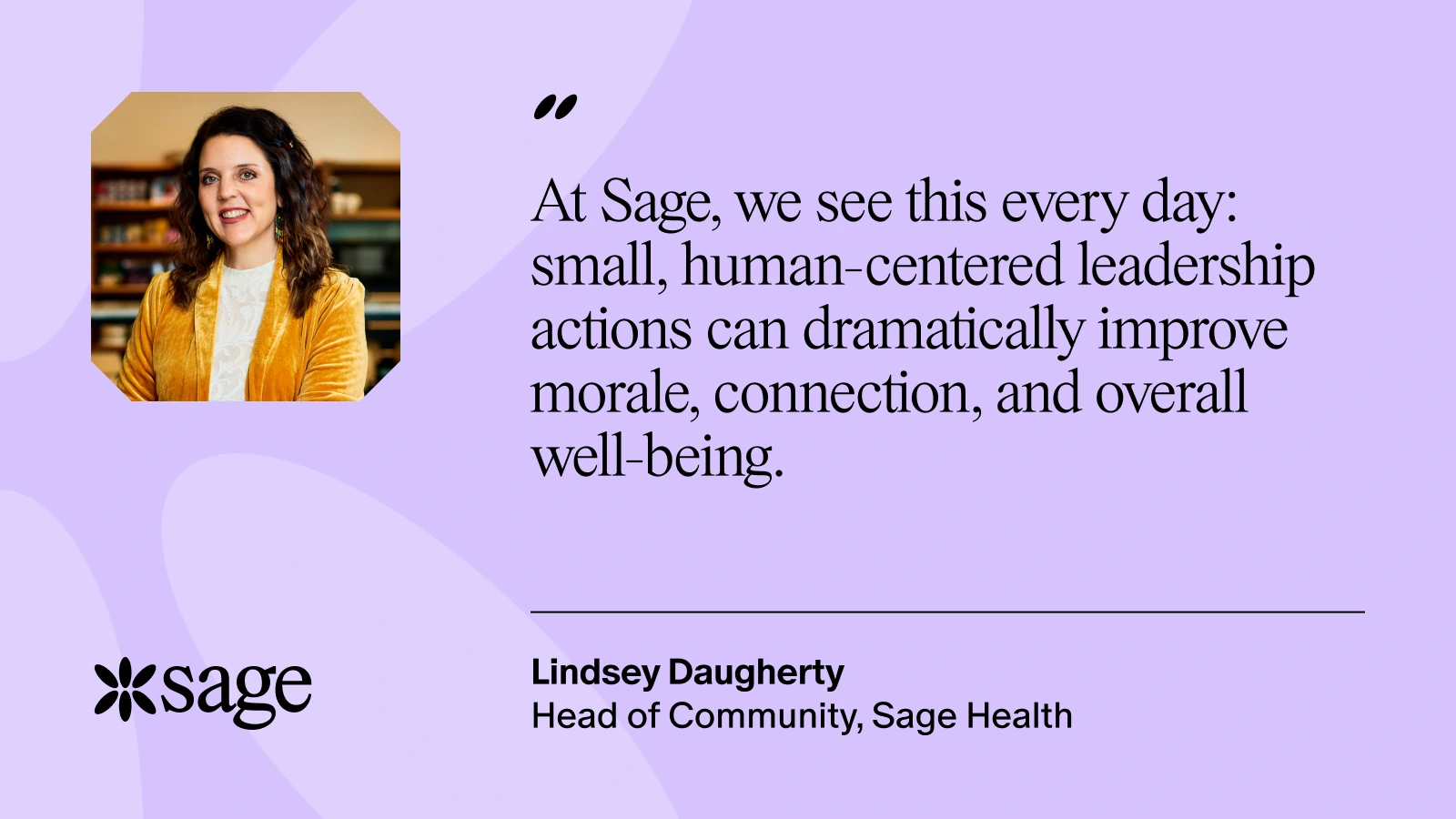
At Sage, we see this every day: small, human-centered leadership actions can dramatically improve morale, connection, and overall well-being.
Here’s how leaders like you can make a real difference.
1. Create a Warm, Welcoming Holiday Environment to Reduce Caregiver Burnout
The atmosphere matters. Especially over the holidays. Leaders can help reduce emotional strain by adding warmth and appreciation throughout the community.
Simple, impactful ideas include:
- Providing warm meals, cocoa, or coffee stations
- Leaving handwritten thank-you notes
- Offering small treats or appreciation gifts
- Creating a team member gratitude board
- Making leadership presence visible and supportive
These gestures don’t eliminate holiday stress, but they directly counter one of the biggest contributors to caregiver burnout: feeling unseen or undervalued.
2. Understand Each Caregiver’s Personal Reason for Working Holiday Shifts
Behind every shift is a different story:
- Some caregivers pick up shifts for financial reasons
- Some don’t have holiday plans
- For others, the season brings loneliness or grief and they’re looking for a distraction
- Believe it or not, some simply want to support their team (and you!)
Leaders who acknowledge this openly build trust and compassion. A sincere “thank you” and recognition of what holiday work requires can greatly reduce emotional fatigue.
Nobody working a holiday should feel invisible.
3. Prioritize Mental Well-Being. Stress Peaks During the Holidays
The holidays often intensify stress, exhaustion, and emotional strain—key drivers of caregiver burnout. Leaders can make well-being a year-round norm by:
- Checking in regularly, especially with team members who rarely ask for help
- Offering flexible scheduling or lighter assignments
- Connecting caregivers to mental health or community resources
- Encouraging open conversations about overwhelm
- Modeling healthy boundaries and self-care
When mental health is treated as part of daily operations, caregivers feel supported—not judged—for needing help.
4. Use Flexible Scheduling to Strengthen Senior Living Caregiver Support
Creative scheduling is one of the most effective burnout-prevention tools leaders have during the holidays.
Examples include:
- Allowing two caregivers to split a shift
- Reassigning tasks to relieve someone who’s stretched thin
- Supporting shift swaps
- Offering short, restorative breaks
Flexibility communicates respect—and often gives caregivers enough relief to prevent deeper exhaustion.
5. Don’t Overlook the Night Shift
Night-shift caregivers often feel the most isolated, especially during the holidays. Strengthening senior living team member support includes:
- Bringing meals or treats exclusively for the night team
- Making personal overnight visits
- Leaving visible appreciation messages
- Ensuring they are included in all holiday acknowledgments—not an afterthought
These caregivers carry the community through the quietest hours. Recognition fuels resilience.
6. Acknowledge the Truth: Working the Holidays Is Hard
Naming the challenge is powerful.
Saying, “We know this is difficult—and we appreciate you so much for being here,” validates caregivers’ emotional experience. Honest, empathetic leadership strengthens connection and lowers resentment, both of which reduce burnout long-term.
Why This Matters for Senior Living Leaders Going Into 2026
Every holiday season brings its own challenges, but one truth remains: caregivers remember how leaders made them feel when the job was hardest.
Leadership that prioritizes wellness, appreciation, and flexibility helps communities:
- Reduce caregiver burnout
- Improve staff retention
- Boost morale and teamwork
- Enhance resident experience
- Build operational resilience
A supportive holiday season lays the foundation for a stronger, more connected team all year long. And that’s exactly the kind of environment Sage is proud to help senior living communities create.
.jpg)