Inside the Sage Clinician Roundtable: Honest Conversations About the Future of Senior Care

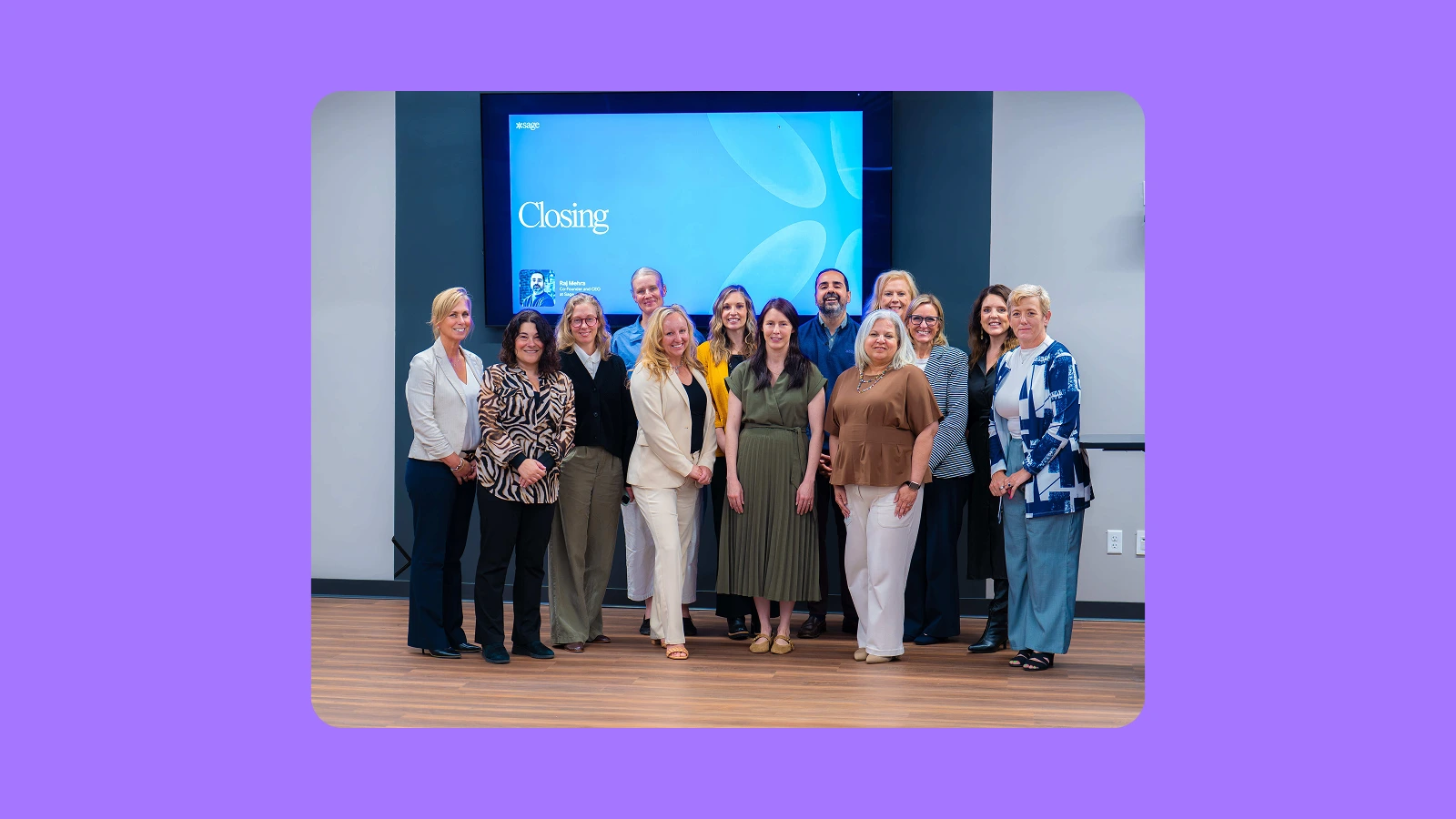
On May 26, Sage hosted its Clinician Roundtable at the Thrive Center in Louisville, Kentucky. It was a day designed around something the senior living industry rarely finds enough time for: meaningful peer conversation.
The goal of the event was simple: bring together clinical leaders and the Sage team to have honest discussions about the realities shaping senior care today and the clinical changes that will define its future.
Importantly, the day was intentionally structured around collaboration rather than presentations. The most valuable insights came from clinicians sharing real experiences with one another.
Throughout the day, several themes surfaced repeatedly: rising resident acuity, caregiver burnout, operational strain, proactive care, and the growing tension between data-driven operations and deeply human care delivery.
One of the most striking discussions centered around how dramatically resident needs have changed over the years. Clinicians discussed how the average move-in age has climbed significantly, while resident complexity has increased alongside it. Many assisted living residents today are managing numerous chronic conditions, cognitive impairment, or dementia-related needs that communities were not originally designed to support at this scale.
And yet operating models across the industry often have not evolved at the same pace.
The conversations were candid. Leaders spoke openly about staffing pressures, aggressive resident behaviors, changing expectations around care delivery, and the challenge of balancing financial realities with resident-centered care.
As one clinician put it during the discussion:
“It can’t just be pure numbers. It has to be humans.”
That sentiment became one of the defining themes of the day.
Another recurring conversation focused on the caregiver experience itself. Attendees discussed how difficult it can be to balance documentation requirements, operational workflows, and meaningful resident interaction. Others talked about the importance of leadership development, shared accountability, and creating environments where caregivers feel supported rather than overwhelmed.
What made the roundtable especially valuable was the level of openness in the room. Participants weren’t simply talking about problems. They were sharing solutions.
Discussions ranged from proactive wellness strategies and regional clinical training programs to partnerships with trade schools to help address workforce gaps. Leaders shared ideas around improving trust within teams, reducing reactive care models, and using technology more thoughtfully inside communities.
The group also explored what the future of senior care may look like over the next five years.
During a tour of the Thrive Center’s Smart Home and healthy aging technology demonstrations, attendees experienced emerging concepts designed to support aging in place and connected care environments. Conversations touched on everything from medication reminders and voice-enabled beds to connected furniture, smart home integrations, and ambient technology designed to reduce friction for both residents and caregivers.
But perhaps the most important part of the day was not the technology itself. It was the partnership behind the conversations.
During collaborative working sessions, Sage’s product and innovation teams sat directly alongside clinicians to listen, ask questions, and better understand real operational pain points happening inside communities every day.
The result was not a “vendor presentation.” It was a collaborative workshop.
Attendees filled Post-it notes with challenges, workflow frustrations, and ideas for improvement. Based on those conversations, Sage will now begin prototyping potential solutions directly informed by caregiver and clinician feedback.
That approach reflects a core belief at Sage: the future of senior living technology should not be built for caregivers in isolation. It should be built with them.
The future of senior care will require stronger collaboration between operators, clinicians, caregivers, and technology partners. And if the conversations in Louisville proved anything, it is that the industry already has many of the right ideas. The opportunity now is creating the space to listen, collaborate, and build together.
We’re incredibly grateful to everyone who participated in the Sage Clinician Roundtable and shared their perspectives so openly.
More video highlights, clinician interviews, and roundtable conversations from the event will be shared soon. Follow us on LinkedIn to stay informed!
.jpg)