Wireless nurse call systems help senior care communities respond to resident needs faster, reduce staff workload, and improve safety through immediate, mobile-enabled alerts.
All-in-one platforms like Sage enhance these systems even further by unifying alerting, workflow coordination, and real-time operational insights into a single, wireless platform that helps teams respond more efficiently and consistently across a community.
What Is a Wireless Nurse Call System?
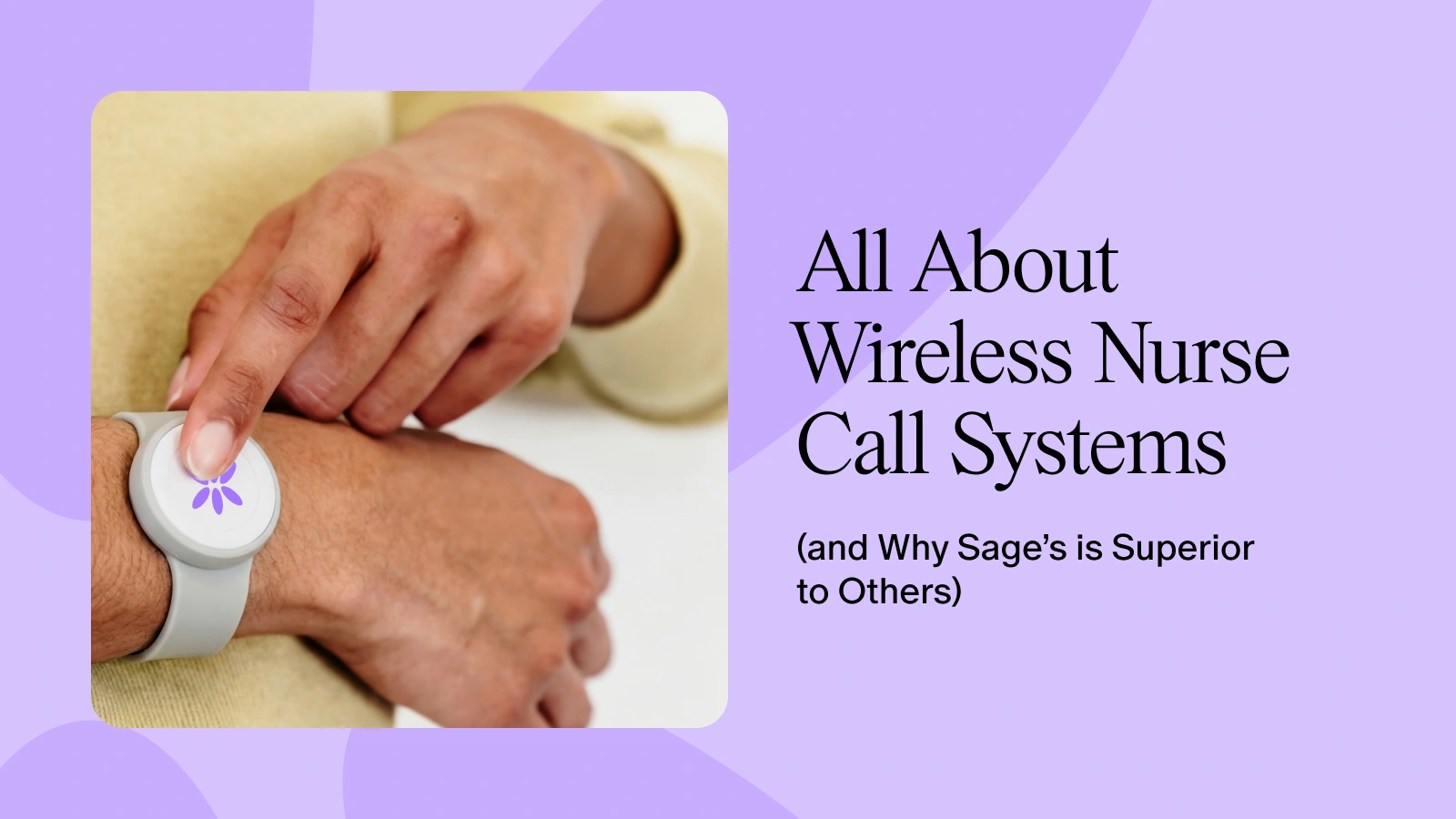
A wireless nurse call system enables residents to request assistance using pendants, pull cords, or wall stations that transmit alerts. As its name implies, it’s wireless… which means it doesn’t require any hard-wired infrastructure.
Core components
- Wireless pendants or wearables
- Pull cords and wall-mounted stations
- Staff mobile devices
- A cloud-based dashboard
- Community-wide alert routing and reporting
Many communities are upgrading to wireless because traditional systems lack the intelligence and scalability modern senior living requires. Legacy systems offer limited visibility, fragmented (or no) reporting and documentation, and, most importantly, regular system failures as a result of disconnected tools.
Why Wireless Nurse Call Systems Matter in Senior Care
Why it matters now
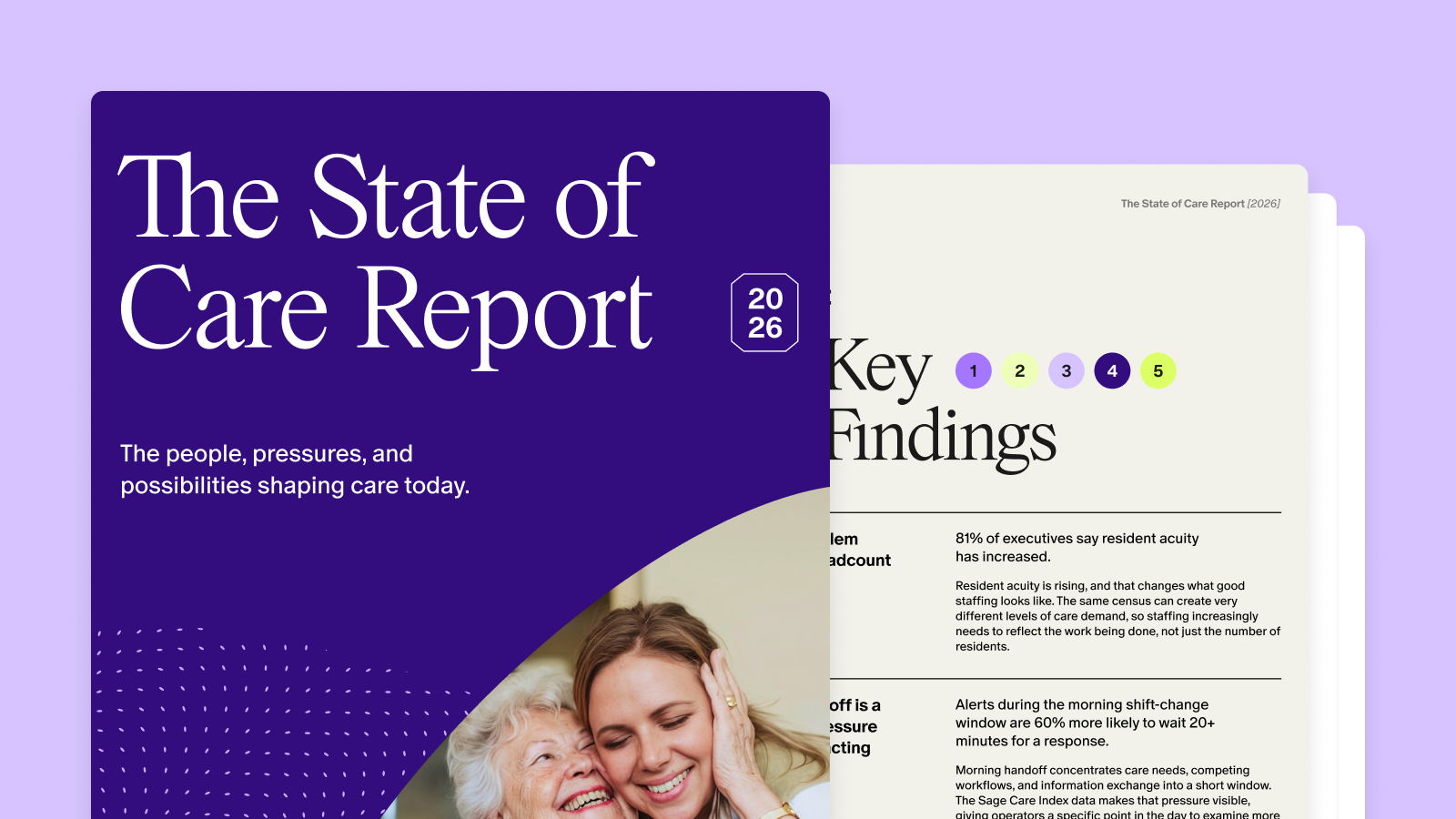
- Residents are entering communities later and with higher acuity (ASHA/August Health, 2025).
- 65% of leaders cite staffing challenges as their top barrier to quality care.
- It’s true. Families are comparing nurse call response times and safety metrics online before choosing a community.
- Outcomes-based payment models require accurate documentation.
A modern wireless nurse call system improves safety, supports staff, and enhances the community’s operational performance.
How a Wireless Nurse Call System Works
Wireless systems use low-energy wireless signals to transmit calls instantly.
Step-by-step
- A resident presses a pendant, pull cord, or wall station.
- The system sends a wireless alert to the central hub.
- Staff receive the alert on mobile devices or workstations.
- A caregiver responds and documents the event.
- Administrators review response times, call patterns, and trends.
This creates a closed loop of alert → response → documentation.
Key Benefits of Modern Wireless Nurse Call Systems
1. Faster Response Times
Mobile alerts and smart routing reduce delays and help staff get to residents more quickly. This directly leads to a reduction in fall rates, fewer injuries in falls, and a reduction in hospitalizations overall. (Springer, 2012)
2. Reduced Alert Fatigue
Clearer routing and fewer unnecessary escalations help caregivers stay focused.
3. Better Staff Coordination
One shared platform improves communication across departments and shifts.
4. Stronger Reporting and Compliance
Accurate records support:
- Regulatory surveys
- Quality reviews
- Corporate reporting
- Family communication
5. Scalability Across Buildings
Wireless systems allow multi-site operators to set standardized workflows and KPIs.
Comparison Table: Traditional vs. Modern Wireless Nurse Call Systems
FAQs About Wireless Nurse Call Systems
How is wireless nurse call different from wired?
Wireless systems use radio-frequency communication instead of hard-wired infrastructure, making installation faster and more flexible.
Does wireless nurse call replace fall detection?
No. Fall detection is a separate safety tool. Nurse call requires intentional activation; fall detection identifies unintentional events. Sage offers fall detection as an additional capability that can be added to its all-in-one platform.
What reporting does a wireless nurse call system provide?
An all-in-one platform like Sage provides AI-driven analyses of response times, call volumes, escalation trends, shift patterns, and resident-level usage.
Is wireless nurse call reliable in older buildings?
Yes. In fact, wireless systems are designed to overcome layout challenges and reduce installation complexity.
Why Sage Is Better Than Most Wireless Nurse Call Systems
We know wireless nurse call systems are a huge upgrade over legacy systems. But did you know that even among wireless systems, not all providers are the same?
Unlike many of its competitors, Sage is a unified senior care platform that elevates wireless nurse call systems through community-wide visibility, smart routing, and connected insights that help teams respond faster and more efficiently.
1. Wireless Nurse Call with Smart, Mobile Alerts
Sage sends alerts directly to staff smartphones, reducing steps and response delays.
2. A Unified View of Community Activity
Instead of viewing nurse call alerts in isolation, Sage provides a connected picture of what’s happening across the building, including patterns in call volume, times of date when alerts spike, resident-level needs, and response time trends. This helps communities optimize staffing, reduce bottlenecks, and improve consistency.
3. Sage Insights for Operational Reporting
Administrators gain access to dashboards that centralize response times, call frequency, staff performance trends, and broader community patterns. This transforms nurse call data into actionable operational intelligence.
Summary
Wireless nurse call systems remain a core safety requirement in senior living. While fall detection is a distinct tool, both are strengthened when connected through a unified platform. Sage brings wireless nurse call, staff coordination, and operational insights together—helping communities improve response times, reduce workload, and deliver safer, more consistent care.
Sources:
Tzeng, HM., Titler, M.G., Ronis, D.L. et al. The contribution of staff call light response time to fall and injurious fall rates: an exploratory study in four US hospitals using archived hospital data. BMC Health Serv Res 12, 84 (2012). https://doi.org/10.1186/1472-6963-12-84
New report by August Health and ASHA highlights the state of clinical leadership in senior living in 2024. (n.d.). https://www.augusthealth.com/resources/the-state-of-senior-living-clinical-leadership-survey-insights
.jpg)