The Future of Care Should Be Shaped by the People Delivering It


"Whose reality is actually shaping your product?"
It's a question I come back to often in this work.
Care is not static. It looks different in a memory care neighborhood than it does in assisted living. It looks different in a 200-bed CCRC in Ohio than it does in a boutique community in California. It looks different depending on your resident population, your staffing model, your state's regulations, and what happened on the floor this morning versus six months ago. Care is nuanced, and it is always moving.
So the strongest clinical voice isn't necessarily the one with the most years of experience. It's the one closest to residents, in the workflow, today—not yesterday.
The tech companies that get this right don't just lean on internal expertise, no matter how deep it is. Expertise can go stale if it isn't in constant contact with how care is actually delivered right now. So they build with the people living and breathing this work every day. To me, that's what co-creation actually means: designing with the people you're building for, not just testing on them once the important decisions are already made.
I've spent most of my career in post-acute and senior living, and I know what it feels like to adapt to technology that was clearly built without us in mind. Co-creation flips that. It means clinical and operational voices are in the room at the earliest stages of design; not brought in at the end to validate something that's already been decided.
Here's what building this way actually gets you. A caregiver on the floor knows the workaround before you've finished building the workflow. They know why a well-intentioned alert gets silenced by week two, or why a feature that tested beautifully in a demo falls apart on a short-staffed unit on a chaotic Tuesday afternoon. They know the difference between what a resident's chart says and what's actually true about them today. None of that shows up in a whiteboard session or a design sprint.
I can't tell you how many genuinely well-built technologies I've seen collecting dust at the nursing station, tucked away in a supply closet, because nobody who actually lived the work had a hand in shaping it. Frontline feedback is essential. It's how you avoid building the wrong thing really well.
Let's be clear. At Sage, we never envisioned our technology taking the place of a caregiver or clinician. Instead, it's about making sure whatever we build actually earns a place in their hands, because someone who does this work every day helped build it. The tools should make them faster and more confident, not replace the judgment they already have.
I didn't come into health tech to be "the voice of the clinician." I came in to make room for the clinicians doing the work today to speak their own truth, and to make sure someone was actually listening.
At the end of the day, the resident doesn't experience a whitepaper or a product roadmap. They experience whether someone got to them in time, whether a change in their condition was caught before it became a crisis, and whether their day felt a little safer than the one before. That's the only test that actually counts. A product built on last decade's realities might still sound right on paper, but the resident won't feel the difference unless it's been pressure-tested against the day-to-day, not just the big vision.
Vision without execution is just noise. And if a solution can’t hold up during the hardest shifts, it isn’t ready. Those are the moments when residents and caregivers need it most.
That's the standard I hold myself and my teammates to. Not how many clinicians are in the room, but whether the right ones are, and whether they were there from the start.
So if you're building for care, build with care. Pull up a seat for the people who live the work—early, often, and always.
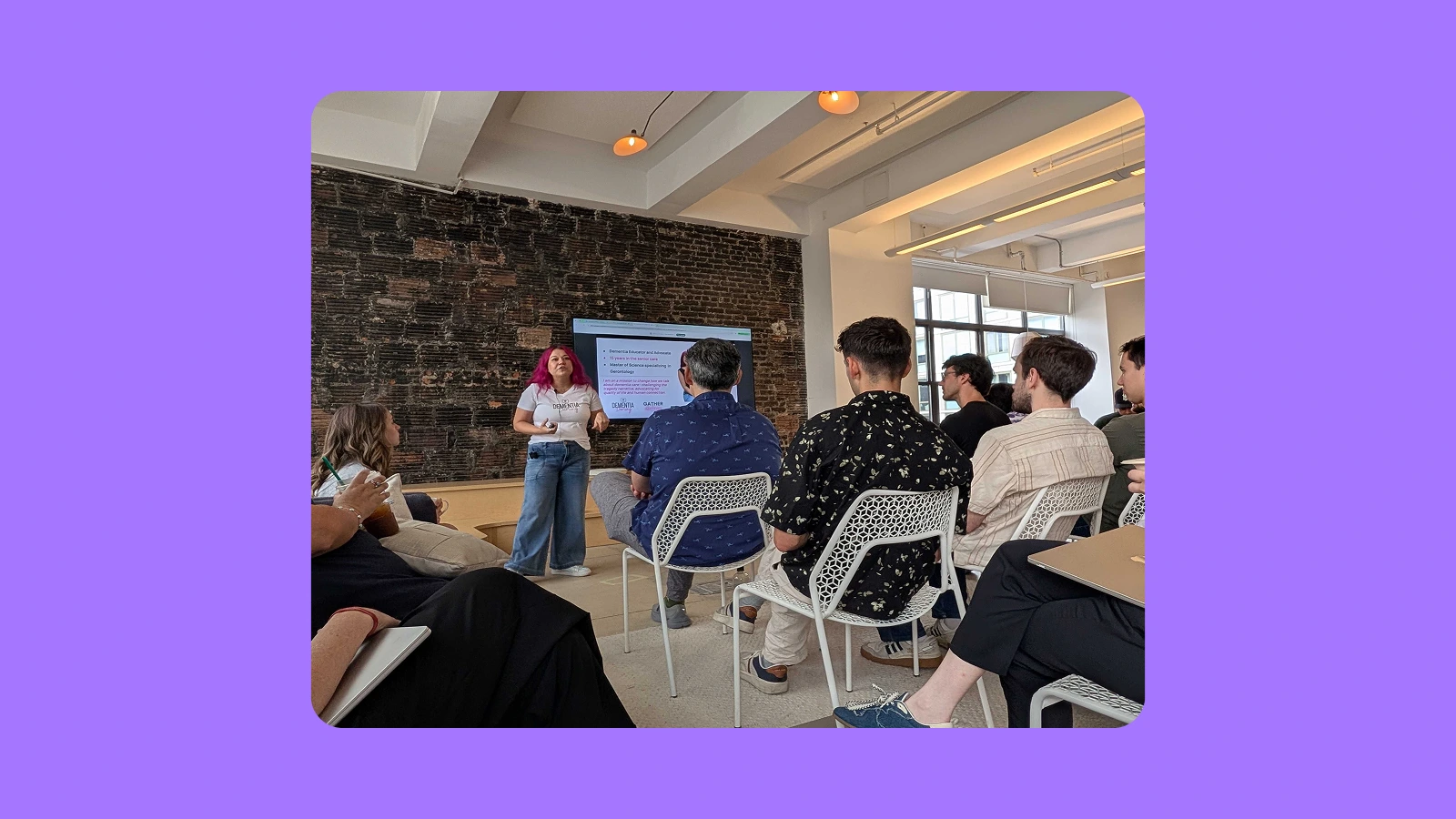
And that's what Sage Shift is all about. We are pulling up seats for the people who live the work. We can't wait to make it happen.