At Sage, we believe building technology for senior living means understanding the people who ultimately rely on it.
That's why this week, nationally recognized dementia educator Carrie Alberts—better known as The Dementia Darling—joined us at Sage for two important initiatives.
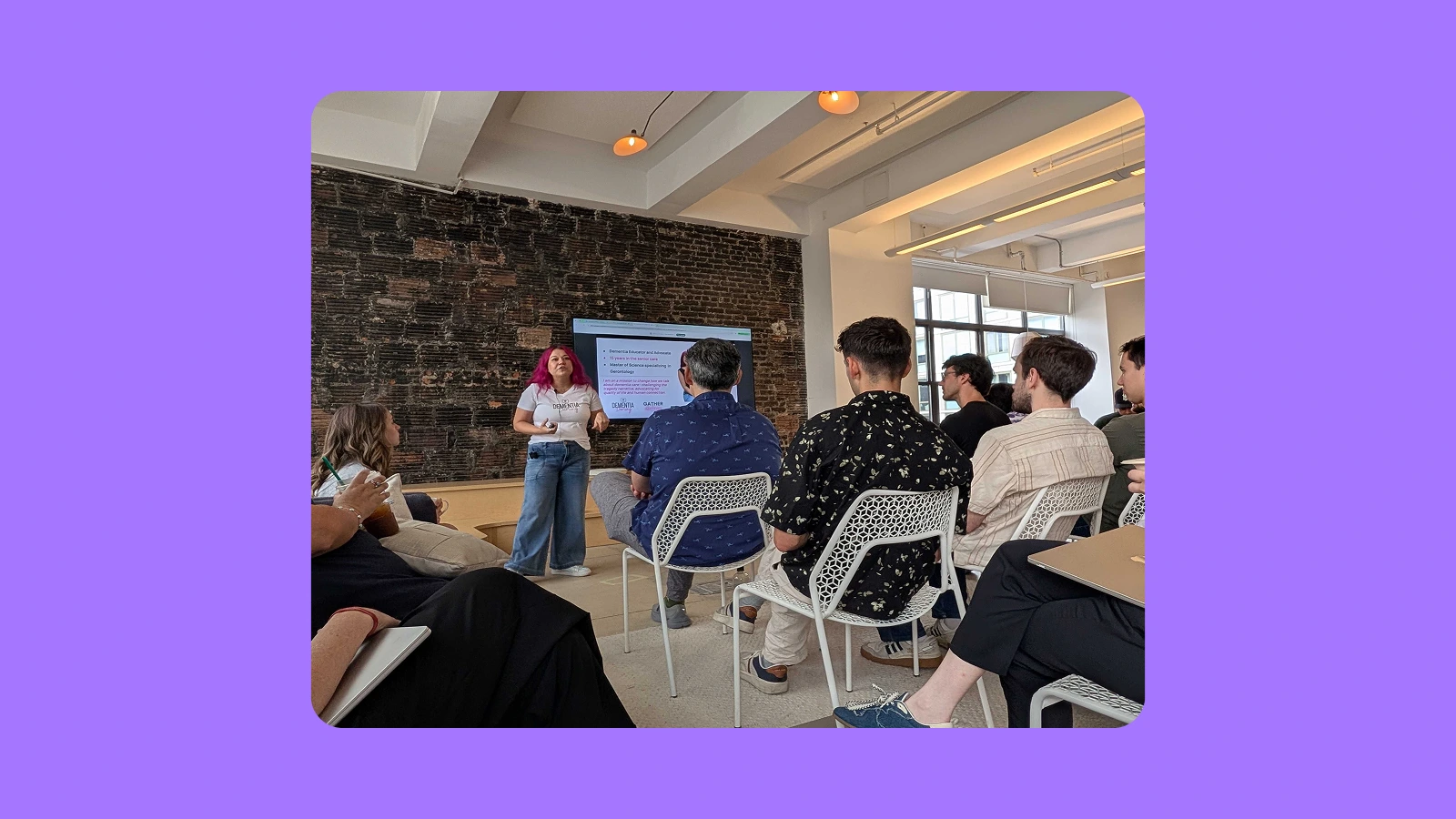
First, Carrie met with the entire Sage team to deepen our collective understanding of dementia, sharing how changes in the brain affect the way people experience their surroundings, communicate, and interact with the world around them.
Carrie also led Dementia Sales Advisor (DSA-NC) certification through the National Institute of Dementia Education for more than 35 Sage team members who regularly work inside senior living communities.
Seeing Residents Through a Different Lens
One common misconception that was discussed is that dementia only impacts memory. In fact, it changes how people experience color, sound, movement, communication, and their environment. A room that feels ordinary to one person may feel confusing or frightening to someone living with dementia.
“The environment is often what's creating the negative communication behaviors,” Alberts explained. “It's not usually the dementia itself.”
Understanding those changes allows people to approach residents with greater empathy, patience, and awareness.
“They're going into people's rooms,” Alberts said. “That's an intimate thing for people. Now they have the tools to approach people in the most dignified and compassionate ways. They understand how they come across when they come into someone's world.”
Why This Matters
Sage technology provides communities with greater visibility into care—helping identify changes, improve safety, and support better decision-making.
But the people implementing, supporting, and standing behind that technology also need to understand the residents whose lives it ultimately serves.
In crediting Sage for taking on this initiative, Alberts noted:
“You're walking the talk. Now Sage has more dementia training than a lot of people working in assisted living ever get. They can notice and see things they didn't before.”
That perspective also influences how we think about product design itself.
From colors and visual contrast to environmental cues and the experience of entering a resident's room, understanding how dementia changes perception helps us build technology that better supports both residents and caregivers.
Technology Built Around Understanding
One of the themes throughout the training was the importance of transparency for families who have loved ones with dementia in a senior living community. Sage data helps with that.
“The safety aspect is huge,” Alberts said. “But the transparency is everything. Families are giving communities their trust. When you have meaningful data about what's happening, it changes everything.”
For people living with dementia—who often cannot communicate pain or changes in condition—that visibility becomes even more important.
Sage technology has helped with that, but dementia education makes that technology more meaningful.
More Than a Certification
For Dakota Stanford, Growth & Expansion Manager, Skilled Nursing, one lesson stood above the rest.
“Sessions like this change how we show up for residents—not just what we know, but how we communicate it. One thing that stuck: match the emotion, not just the words.”
That captures exactly why this investment mattered.
It's another way Sage continues investing in the people who serve our clients, ensuring that every interaction with residents is guided not only by knowledge, but by empathy, dignity, and compassion.