Senior Living Change Management: A Practical Toolkit for Successful Transitions

Senior living has changed. The way we manage change must evolve too.
There was a time when change in senior living happened gradually.
Today, it feels constant.
Communities are caring for residents with increasingly complex needs. New technologies are transforming how care is delivered and documented. Regulatory requirements continue to evolve. Staffing models are adapting to workforce realities. And operators are being asked to improve outcomes while maintaining financial sustainability.
The senior living industry is navigating one of the most significant periods of transformation in its history. The challenge is around ensuring people successfully adapt to it.
👉 Download the toolkit
The Resident Has Changed
Perhaps the most significant shift has occurred among residents themselves.
Today's residents are older, managing more chronic conditions, and arriving with care needs that would have been uncommon in assisted living a decade ago. Clinical leaders across the industry consistently report caring for higher-acuity residents than ever before.
The implication is significant.
As resident needs evolve, communities must continuously adapt care models, staffing strategies, workflows, and documentation practices to keep pace. What worked five years ago may no longer be sufficient today.
Those changes require leadership, communication, training, and alignment.
Technology Is No Longer Optional
At the same time resident needs are becoming more complex, operators are increasingly turning to technology to help manage that complexity.
From EHRs and workforce management platforms to fall detection, task management, care coordination tools, and operational analytics, technology is becoming an essential part of how senior living communities operate.
But technology alone doesn't create better outcomes.
Successful implementations depend on whether caregivers and staff understand the purpose behind the change, receive adequate training, and feel supported throughout the transition.
The organizations seeing the greatest success with technology are the ones going beyond just installing the technology. They are building cultures that embrace continuous improvement and using data to make better decisions.
Why Change Management Matters More Than Ever
This is where change management becomes a strategic advantage.
When organizations introduce a new workflow, implement a new technology platform, respond to regulatory changes, or adjust staffing models, they are asking people to work differently.
Without a structured approach, even well-intentioned initiatives can create confusion, resistance, and operational disruption.
With the right approach, change can strengthen engagement, improve adoption, and help organizations achieve the outcomes they were seeking in the first place.
A Practical Resource for Senior Living Leaders
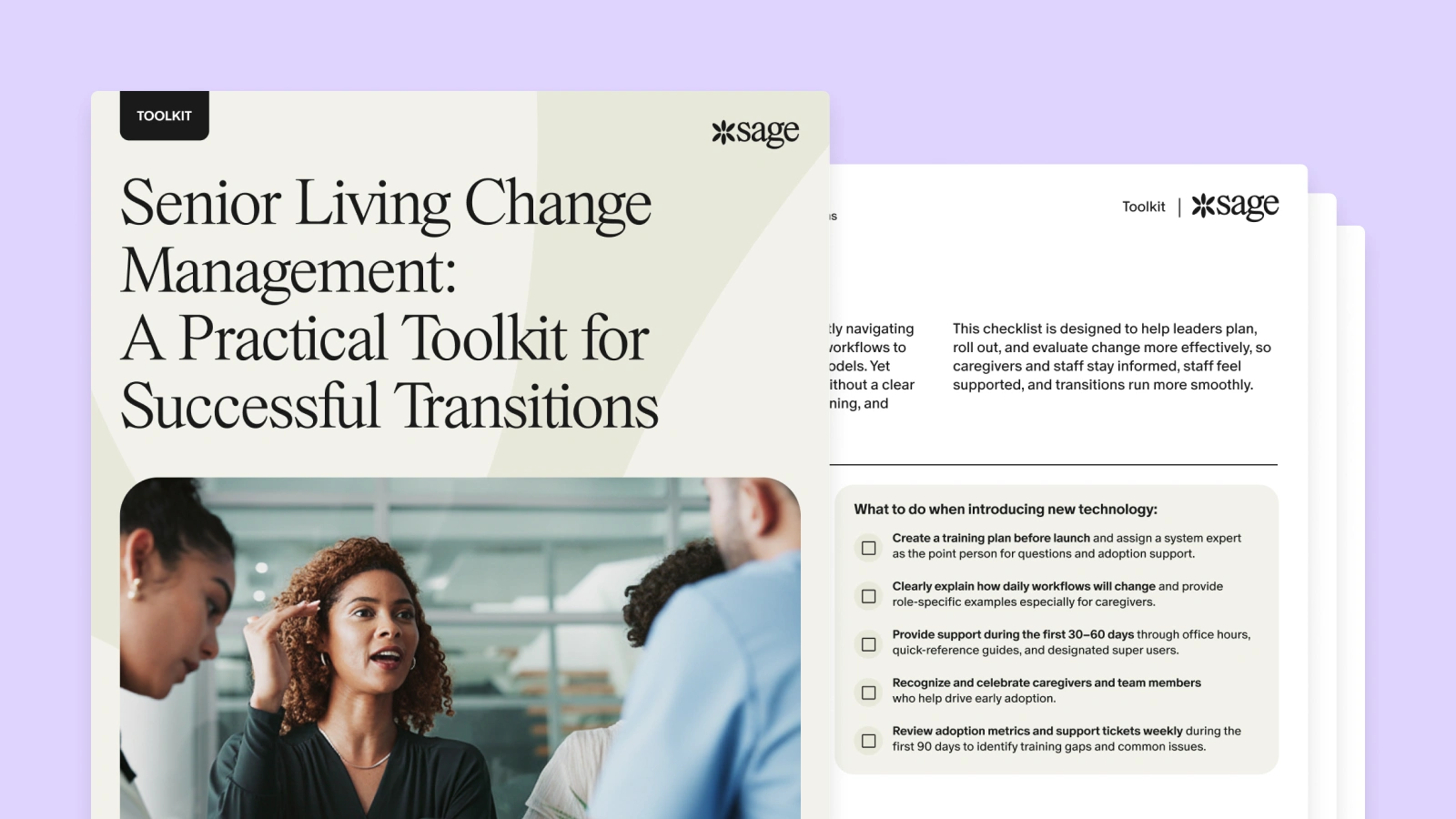
To help organizations navigate these transitions more effectively, Sage created the Senior Living Change Management Toolkit: A Practical Toolkit for Successful Transitions.
The toolkit provides practical guidance for managing some of the most common types of change facing senior living organizations today, including:
- Technology implementations
- Leadership transitions
- Workflow and staffing changes
- Regulatory updates
- Renovations and facility improvements
It also includes recommendations for communication, training, adoption support, and post-implementation evaluation. Because successful change doesn't end on launch day.
As resident needs continue to evolve and technology becomes increasingly central to care delivery, organizations that build strong change management capabilities will be better positioned to support caregivers, improve outcomes, and thrive in a rapidly changing industry.
Download the toolkit and start building a more structured approach to change today.